The Electric Life
Your car runs
on sunlight now.
EVs, heat pumps, batteries — your home is becoming the power company. Size the roof once, and the sun fuels all of it. See your number in 30 seconds below.
The Electric Life
EVs, heat pumps, batteries — your home is becoming the power company. Size the roof once, and the sun fuels all of it. See your number in 30 seconds below.
The Electric Life Calculator
Planning estimate, not a quote. Assumptions: ~3.5 mi/kWh EV efficiency · PG&E avg ~40.6¢/kWh (Mar 2026 advisory) · Central Valley production ~1,400–1,550 kWh per kW per year · gas car at 30 mpg and recent CA gas prices. Your exact design comes from your real bill and roof — free, below.
Straight answers on EVs + solar
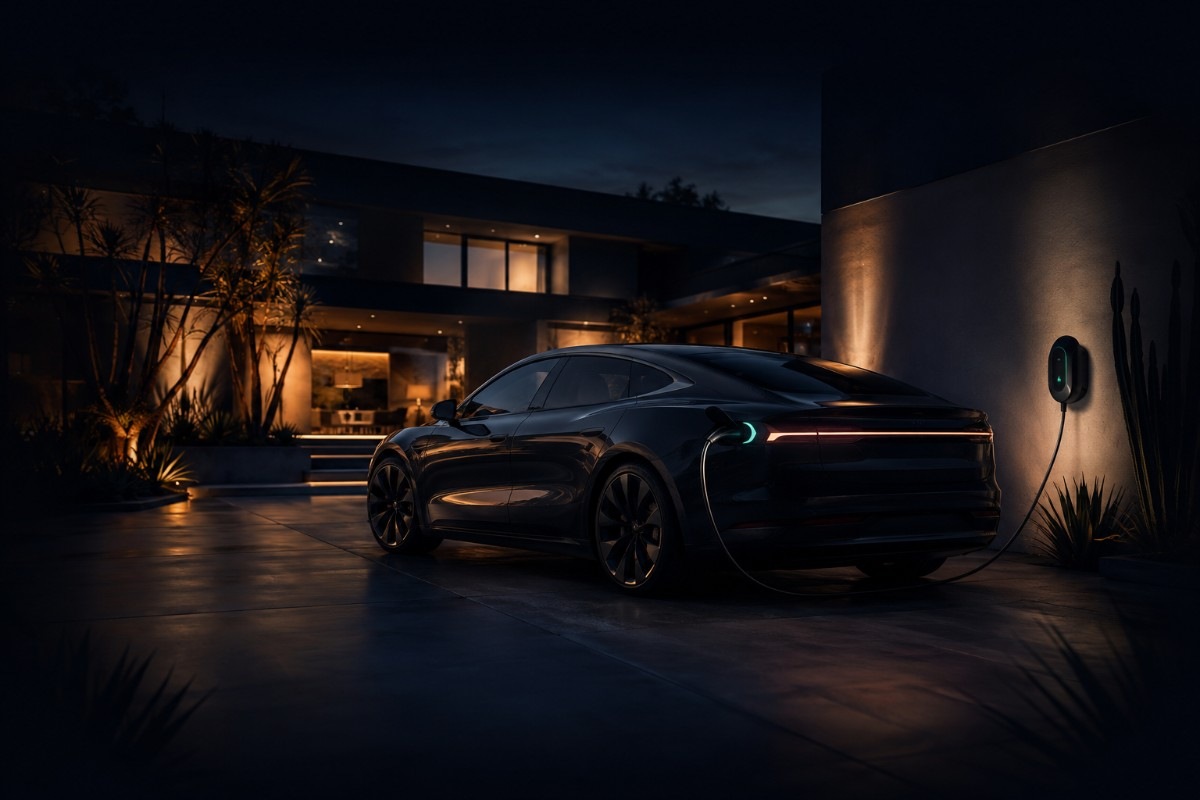
Every EV that parks in a Fresno garage turns the electric bill into the fuel bill. A typical EV driven around 12,000 miles a year draws roughly 3,400–4,300 kWh annually — about the same as adding a second refrigerator, a pool pump, and a window AC combined. On PG&E's standard rates of roughly 40.6¢ per kWh, that's real money: often $115–$145 a month just to drive.
The rooftop math is friendlier. In the Central Valley's sun, each kilowatt of solar produces roughly 1,400–1,550 kWh a year — so the same 12,000 miles takes only about 2.3–3 kW of extra panels. Size the system for the house and the car in one design, and your cost per mile drops to a fraction of both gas and grid charging, locked in for decades.
Two things most solar quotes get wrong on EV homes: they size for last year's usage (before the car showed up), and they ignore NEM 3.0 — California's current billing rules, under which exported solar earns little while evening grid power costs a lot. If you charge overnight, a battery moves your own daytime sun into your car after dark, which is why roughly 7 in 10 new California systems now pair storage. Going electric with heat pump HVAC or a pool? Same logic — one properly sized system beats two installs and two permits every time.
That's exactly what I check in a free plan: your real usage, your driving, what's on your electrification wishlist, and which $0-down program prices it best — with every fee and escalator in writing. No pressure, no door knockers. Run the 60-second qualifier or send me your PG&E bill and I'll do the math for you.
Around 12,000 miles a year works out to roughly 2.3–3 kW of extra solar in the Central Valley — about 5 to 8 modern panels on top of what your home already needs. Your exact count depends on miles driven, your car's efficiency, and your roof's sun exposure.
At PG&E's average ~40.6¢/kWh, a 12,000-mile year can add roughly $115–$145 a month on a standard plan. EV rate plans offer cheaper overnight windows but pricier peaks — solar sized for the car beats both over time.
Almost always in California. A 30-mpg car driven 12,000 miles costs roughly $1,700–$2,000 a year in fuel at recent CA prices. The same miles on home solar typically cost a small fraction of that — and $0-down programs mean no equipment cost up front.
Under NEM 3.0 it usually pays: exported daytime solar earns little, and evening grid power is expensive. A battery shifts your own sun to when you actually charge. About 7 in 10 new CA systems now include one — I'll show you the math both ways.